
Introduction
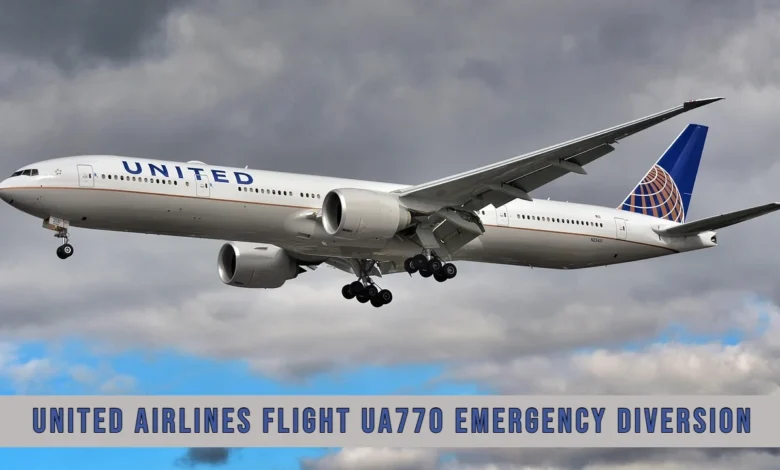
The phrase United Airlines Flight UA770 Emergency Diversion spread quickly across aviation forums, news feeds, and social platforms, sparking a familiar mix of curiosity, concern, and speculation. Emergency diversions always attract attention, not because they’re common, but because they reveal how the aviation safety net actually works when real risk appears at 35,000 feet.
For passengers, the word diversion instantly triggers anxiety. For pilots, air traffic controllers, and engineers, it signals a carefully structured safety response built on decades of data, training, and regulation. What most people never see is how many critical systems quietly align in the background long before a plane touches the alternate runway.
This article breaks down the United Airlines Flight UA770 emergency diversion from a technical, operational, and human perspective. Not rumors. Not headlines designed for clicks. Just how these events typically unfold, why they happen, what passengers experience, and what this incident teaches us about modern aviation safety.
What Is an Emergency Diversion in Commercial Aviation?
How Airlines Define an Emergency Diversion
An emergency diversion occurs when a flight cannot safely continue to its scheduled destination and must land at the nearest suitable airport. This is not a casual decision. It follows strict protocols defined by aircraft manufacturers, aviation authorities, and airline safety manuals.
Diversions are classified into different severity levels. Some involve medical emergencies, while others stem from mechanical faults, pressurization irregularities, smoke indications, or engine performance alerts. The flight crew always chooses the safest option based on real-time risk assessment.
Why Emergency Diversions Are More Common Than People Think
Contrary to popular belief, diversions are not rare. Globally, thousands occur each year across all airlines. Most are preventive, not catastrophic. Modern aircraft are built with multiple redundant systems, yet aviation philosophy always favors early caution over late correction.
What Triggered the United Airlines Flight UA770 Emergency Diversion?
Early Indications from Flight Tracking Data
Public flight tracking sources typically show altitude changes, speed drops, and course reversals within minutes of a diversion decision. These patterns often indicate either:
- Cabin pressurization alerts
- Smoke or odor warnings
- Unstable engine sensor readings
- Hydraulic system fluctuations
While airlines rarely release full technical logs immediately, patterns observed during the United Airlines Flight UA770 emergency diversion strongly resemble standard precautionary response behavior rather than structural failure.
Why Airlines Delay Technical Disclosures
Airlines must verify sensor data, retrieve cockpit voice recordings, debrief crew, and analyze maintenance logs before issuing public statements. This process protects both safety integrity and legal accuracy. Immediate speculation often outpaces confirmed fact.
Inside the Cockpit: How Pilots Handle a Diversion Decision
Command Authority and Crew Coordination
The captain has absolute authority during in-flight safety events. The decision to divert is made collaboratively with the first officer after running checklist diagnostics. These checklists are not generic. They are aircraft-type-specific and scenario-driven.
In a situation like the United Airlines Flight UA770 emergency diversion, pilots would have consulted emergency quick reference handbooks while communicating continuously with air traffic control and airline operations engineers on the ground.
Time Pressure vs. Precision
Pilots train relentlessly for these scenarios in simulators. The goal is never speed alone. It is accuracy under stress. Every step must be executed in sequence, regardless of passenger anxiety, weather complications, or airspace congestion.
Passenger Experience During an Emergency Diversion
What Passengers Actually Feel in Real Time
From the cabin, diversions feel sudden. Passengers may notice:
- The aircraft is turning sharply from its original route
- Descent beginning earlier than expected
- Cabin crew securing galleys earlier than usual
- Revised landing announcements
However, most emergency diversions do not involve dramatic turbulence, oxygen masks, or visible aircraft damage. They feel controlled because they are.
Communication Gaps and Anxiety
Pilots often provide limited details mid-air. This is intentional. Incomplete technical information can cause unnecessary panic. Airlines prioritize calm, clear, and legally accurate messaging.
Technical Systems That Influence Diversion Decisions
Aircraft Sensor Architecture
Modern airliners rely on distributed sensor networks for monitoring:
- Engine pressure ratios
- Cabin differential pressure
- Exhaust gas temperature
- Structural vibration
- Electrical load balance
A single abnormal reading may not be dangerous. However, correlated deviations across multiple systems often trigger precautionary action.
Flight Management Computer Logic
Flight management systems continuously recalculate the safest diversion airports based on:
- Fuel load
- Weather conditions
- Runway length
- Medical emergency access
- Maintenance capabilities
This automated guidance assists pilots, but human authority always prevails.
How Air Traffic Control Manages an Emergency Diversion
Priority Airspace Clearance
Once a diversion is declared, the aircraft receives immediate priority over other traffic. Airspace controllers clear paths, delay departures, and redirect inbound flights to maintain separation.
Ground Emergency Services Coordination
Even when no visible danger exists, emergency crews are positioned at landing runways. This is not theater. It ensures an immediate response if conditions escalate upon touchdown.
Risk Assessment vs. Public Perception
Why “Emergency” Sounds Scarier Than It Is
The word emergency suggests imminent disaster. In aviation language, it often simply means a non-normal condition requiring immediate action. That could be something as simple as an unreliable sensor reading.
Some of the world’s highest-rated airlines divert flights weekly as part of risk-minimized operation models.
Real Accident Rates vs. Media Narratives
Commercial aviation maintains accident rates measured in fractions per million flights. Diversions actually contribute to that statistical safety record rather than threaten it.
Historical Context: Other Notable Emergency Diversions
Case Example: Transatlantic Engine Warning Diversion
In 2022, a wide-body aircraft diverted mid-Atlantic due to an engine oil pressure indication. Later inspections revealed a faulty sensor, not an engine fault. Passengers were stranded overnight, but no safety compromise occurred.
Case Example: Smoke Alert False Positive
In another widely reported incident, a cabin smoke warning was triggered by a condensation short circuit. The aircraft landed safely and returned to service after inspection.
These examples mirror the same safety-first logic used during the United Airlines Flight UA770 emergency diversion.
What Happens to the Aircraft After Landing?
Post-Diversion Engineering Inspection
Once grounded, the aircraft undergoes:
- Data recorder extraction
- System diagnostics
- Borescope inspection of engines
- Pressure system leak detection
- Electrical fault isolation
This process can take hours or days, depending on fault complexity.
Return-to-Service Authorization
No aircraft returns to flight until certified by both airline engineers and regulatory authorities. Even intermittent warnings require confirmation of resolution.
Passenger Rights After a Diversion
Rebooking and Accommodation Policies
Under U.S. Department of Transportation guidelines, airlines must assist passengers with alternative transportation. While compensation varies, safety-related delays receive priority handling.
Medical and Psychological Support
Some passengers require post-diversion medical evaluation due to stress, dehydration, or exacerbated conditions. Airlines deploy medical response protocols accordingly.
Comparison Table: Emergency Diversion vs. Other Flight Interruptions
| Feature | Emergency Diversion | Routine Delay | Technical Grounding |
|---|---|---|---|
| Safety Risk | Potential | None | Preventive |
| Passenger Stress | High | Moderate | Low |
| Crew Protocol | Emergency Checklists | Operational | Maintenance |
| ATC Priority | Immediate | Normal | None |
| Media Coverage | Intense | Minimal | Rare |
Expert-Level Practical Tips for Passengers
- Always keep your seatbelt fastened during a cruise. Turbulence after route changes can occur unexpectedly.
- Trust diversion decisions. They are built on layered safety logic, not guesswork.
- Avoid social media speculation during active flight incidents. Misinformation spreads faster than facts.
- Retain boarding passes for rebooking leverage. Documentation speeds compensation processing.
- Monitor official airline notifications instead of unofficial aviation forums.
Why the UA770 Event Matters Beyond One Flight
The United Airlines Flight UA770 emergency diversion highlights how modern aviation no longer waits for failure before acting. The industry operates on predictive prevention, not reactive survival.
Every diversion reinforces:
- Aircraft design redundancy
- Pilot training discipline
- Air traffic coordination efficiency
- Maintenance precision standards
These systems are invisible when flights operate smoothly. They become visible only when something deviates from ideal conditions.
Conclusion
The United Airlines Flight UA770 emergency diversion was not a sign of failure. It was evidence that aviation safety systems worked exactly as intended. When anomalies appear, no matter how minor, aircraft are routed toward safety immediately, not after risk escalates.
Emergency diversions disrupt schedules, inconvenience passengers, and spark headlines. Yet those same diversions are the quiet reason global aviation remains the safest mode of mass transportation ever built. Safety does not happen at the runway. It happens long before wheels touch the ground.
FAQs
Was United Airlines Flight UA770 in danger of crashing?
There is no verified indication of crash-level structural risk. Diversions are precautionary by design.
Why don’t airlines give full technical details immediately?
Because flight data, maintenance logs, and crew reports must be verified first.
Do pilots practice emergency diversions in training?
Yes. Diversions are one of the most frequently simulated scenarios.
Are emergency diversions becoming more common?
They are becoming more visible due to flight tracking transparency, not due to increased risk.
Is it safe to fly after hearing about diversions?
Yes. Diversions reflect safety at work, not safety collapsing.
Do passengers get compensation after emergency landings?
Policies vary, but airlines must rebook and assist passengers promptly.
Does a diverted aircraft always have mechanical damage?
No. Many diversions result from sensor or system warnings that later prove non-critical.
Can weather alone cause an emergency diversion?
Yes. Severe turbulence, wind shear, or thunderstorm avoidance may require rapid rerouting.
Also Read More